
Why are young people so obsessed with the number of sexual partners they've had? Decoding the psychological and social issues.

Why Does the Number of Sexual Partners Obsess Young People? Decrypting the Psychological and Social Issues
For years, the number of sexual partners has become a recurring topic of conversation among young adults. Whether around drinks with friends, on online forums, or in discussions on social media, this question keeps coming up: “How many have you had?” But why this obsession? Why does this number, often perceived as an indicator of success or popularity, weigh so heavily on the minds of young generations?
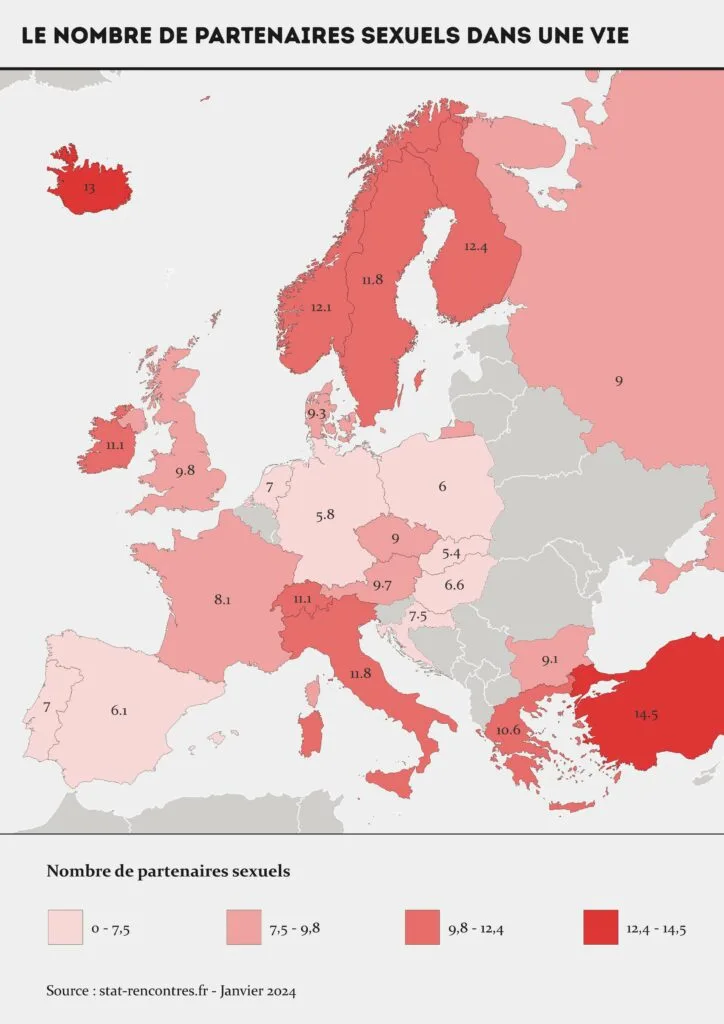
1. Social Pressure: Between Social Networks and Implicit Norms
Social networks have amplified this trend by turning sexuality into a performance spectacle. Instagram stories, TikTok posts, or even discussions on Snapchat normalize the idea that the number of partners is synonymous with freedom, adventure, or even desirability. However, behind these appearances lies a much more complex reality:
- The comparison effect: Young people constantly compare themselves to the idealized stories of their peers, creating anxiety about their own experience.
- The quest for validation: A high number of partners may be seen as proof of popularity or success, especially in a context where social image is paramount.
- Misinformation: Myths about sexuality, often relayed by influencers or series, reinforce the idea that quantity is more important than the quality of relationships.
“On social networks, we often show a sanitized version of sexuality. No one talks about doubts, failures, or regrets. As a result, young people believe that everyone has a perfect sex life.”
— Dr. Sophie Martin, sexologist and psychologist specializing in young adults
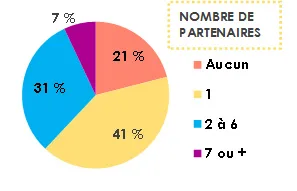
2. Psychology of the Quest for Identity: Sex as Proof of Fulfillment
For many young people, sexuality is a marker of independence and maturity. Having multiple partners may be seen as a way to detach from family expectations or to prove that one has “grown up.” However, this search for identity can also lead to impulsive behavior or to sexuality that is disconnected from one’s own desires.
Studies in psychology show that this quest is often linked to:
- A need for social recognition, especially in environments where one is still in development (studies, first jobs).
- A fear of commitment, which pushes some to prioritize relationships without attachment in order to avoid vulnerability.
- A confusion between sexuality and personal value, where the number of partners becomes a substitute for self-esteem.

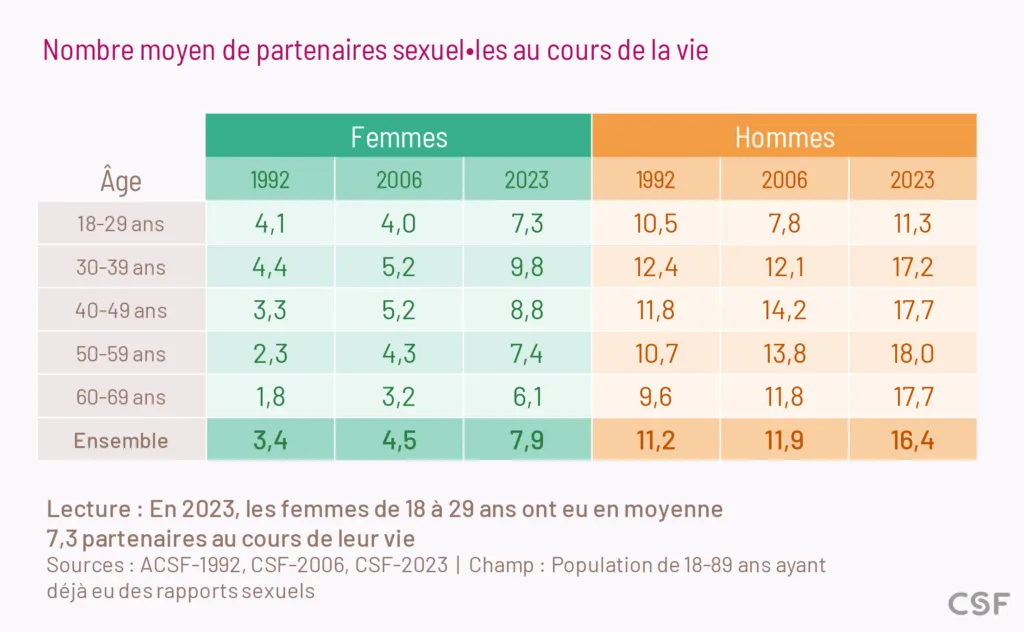
3. Gender Stereotypes: Why are Women and Men Judged Differently?
The number of sexual partners is rarely evaluated in the same way depending on gender. A recent study published in Psychology Today reveals that:
- Men are often congratulated for having a high number of partners, perceived as a sign of virility or success.
- Women, on the other hand, risk being stigmatized, associated with clichés such as the “easy woman” or the “slut.” This double standard creates additional pressure.
- Non-binary or LGBTQ+ individuals navigate between these expectations and specific norms within their communities, adding a layer of complexity.
These inequalities reinforce the idea that sexuality is a zero-sum game, where only certain individuals “win” in terms of visibility or status.
4. Sexual and Affective Health: When the Number Becomes a Burden
Behind this obsession with numbers lie real consequences on the mental and physical health of young people:
- Anxiety and guilt: Many young people report feeling inadequate if their number of partners does not match what they believe to be the “norm.” This pressure can lead to risky behaviors (unprotected sex, toxic relationships).
- Relationship difficulties: The fear of judgment can lead to lying about one’s sexual past, creating fragile dynamics of trust in new relationships.
- Impact on physical health: Sexuality based on performance rather than pleasure can lead to problems such as sexually transmitted infections (STIs) or emotional desensitization.
A survey conducted by the National Institute of Public Health (INSP) in 2025 shows that 30% of young people aged 18 to 25 have already experienced some form of distress related to comparisons about their sex life.
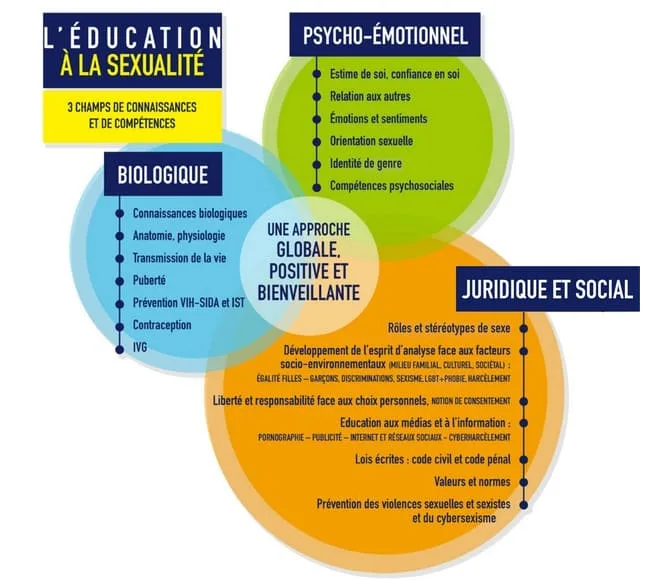
5. How to Break the Taboo? Words from Experts and Testimonials
Fortunately, voices are being raised to demystify this issue and encourage a healthier approach to sexuality. Here are some ways forward:
- Talking openly: Initiatives such as #SexEdForAll or dedicated podcasts (like “Let’s Talk Sexuality”) show that discussion is possible without judgment.
- Refocusing on pleasure and consent: Rather than counting, the important thing is to understand one’s desires and communicate them clearly.
- Denouncing myths: Campaigns such as “The Number Does Not Define Your Value” remind us that sexuality is diverse and cannot be reduced to a number.
- Seeking professional support: For those who feel overwhelmed by this pressure, sexologists or therapists can help rebuild a positive self-image, independent of social expectations.
“The real problem is not the number of partners, but the fear of judgment. Once we accept that our sexuality belongs to us, everything becomes easier.”
— Léa, 24, sociology student (testimony collected for this article)
Conclusion: Towards a Sexuality Freed from Numbers
The number of sexual partners is only a reflection of a society that confuses sexuality with performance. By becoming aware of the psychological and social mechanisms that fuel this obsession, young people can take back control of their affective lives. The goal? To move from a logic of competition to a kind and fulfilling approach.
Never forget to play safely!
Be Geek, Be Kinky!

You may also like
Disability and Sexuality: Breaking Down Taboos for Guaranteed Intimate Fulfillment
Summer infidelity: should you confess everything or protect your relationship by remaining silent?
Is my partner really my soulmate? What science reveals about relationship doubts.
Uniform Fetish: What Your Attraction to Firefighters or Police Officers Reveals About Your Intimate Life
Couple's vacations: when the quest for the perfect photo puts stress in the spotlight.